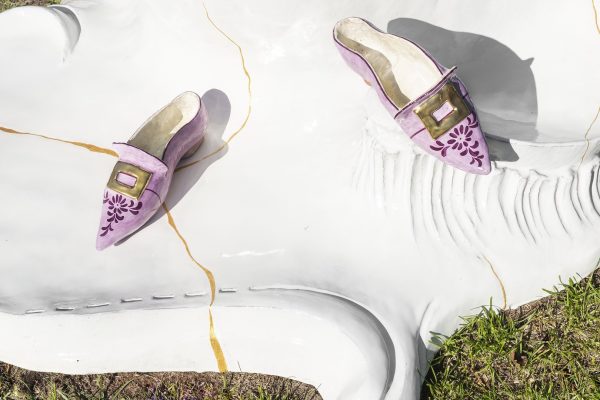
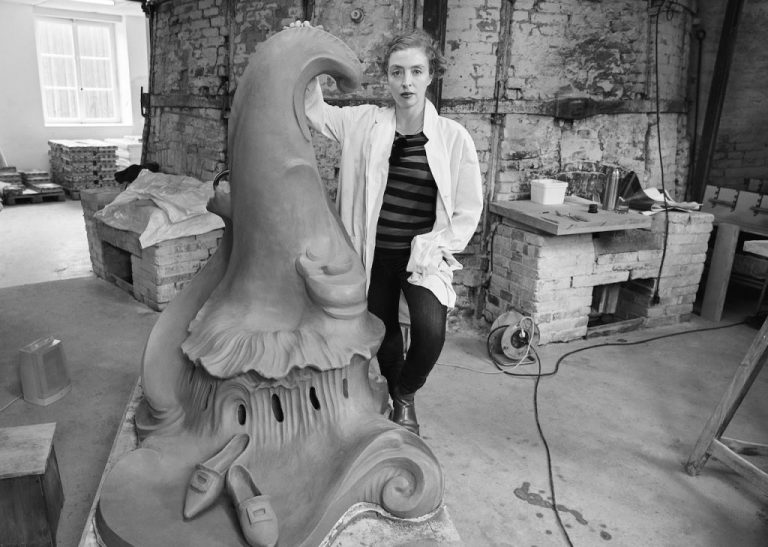
Museo Novecento is delighted to present Rachel Feinstein in Florence, a career survey dedicated to Rachel Feinstein (Fort Defiance, Arizona, 1971) and featuring a series of works being shown in Florence for the first time. The exhibition extends across three key locations in the city: the Museo Stefano Bardini, the Palazzo Medici Riccardi and the Museo Marino Marini (from 9 June to 18 September 2023). Promoted by the Metropolitan City of Florence and the City of Florence, organized by MUS.E, the exhibition is curated by Sergio Risaliti and Stefania Rispoli, and is the first career survey to be devoted to the American artist by an Italian museum.
The curators have chosen to put Rachel Feinstein’s works in dialogue with the collections of Museo Stefano Bardini, Palazzo Medici Riccardi and Museo Marino Marini, thus inaugurating a close dialogue between the masterpieces housed within these places and the works created by the American artist: “I’m very excited to show in Florence because Donatello is my absolute king”, says the artist. She is showing a series of paintings and sculptures, including some newly produced pieces, which look to the Gothic and Renaissance, Florentine and northern European traditions. Drawing inspiration from the collections of the three museums, her works engage openly and generously with those of past masters ranging from Donatello to Michelozzo and through to the sculptures of Marino Marini.
Exhibited in the garden and rooms of the Palazzo Medici Riccardi, the epitome of the princely Renaissance dwelling and the Medici family’s first residence, are some ceramic sculptures and a series of paintings that interact effectively with the late-Baroque dimension of the museum, associated with the tastes of the Riccardi family and the artists of the age, including Luca Giordano. In the garden – the pride and joy of the building, formerly a place for meeting and for recreation, and the pulsating heart of palace life – are four majolica sculptures by Feinstein. These evoke shades of Rococo and seem to immerse us in the atmosphere of a court life made up of lavish spectacle, banquets and polite conversation.
In the Medici apartments, on the other hand, are a series of paintings on mirrors that depict sumptuous villas surrounded by luxuriant gardens where men and women converse amiably. The artist fills these landscapes with a range of disparate elements – modern buildings inspired by luxury West Coast villas, ladies and knights in medieval attire, courtesans and sports cars. In the face of this spectacle, the viewer feels a sense of estrangement and is transported into a dreamlike dimension. The almost immersive environment further highlights the distortive effects of consumer-related desire that the artist wishes to evoke. Between these landscapes there are also two portraits of women. These have something of a Rococo flavour, as shown by their big headpieces, their clothing and poses, and are simultaneously marvellous, grotesque and anachronous.
Engaging closely with the three museum spaces, which have always been given over to celebrating and preserving the memory of male power exercised over the centuries and evoked in the magnificent masterpieces from the past, Feinstein’s works create an unprecedented rupture. Their expressive charge breaks the equilibrium of forms, prompting reflection on themes such as pathos and eros through the representation of the female body and an unashamed interaction between spirituality and desire.
The show is complemented by the third episode of Letizia Fuochi‘s podcast Labirinto900. The episode is titled Rachel Feinstein – The uncanny experience of vision and can be listened to on Spreaker.
Special thanks to the Palazzo Tornabuoni, Florence.